
Table of Contents
- Why Pipeline Access Roads Matter
- New Pipeline Installation vs. Integrity Digs
- Choosing Between TerraLam® and Timber Mats
- Protecting Sensitive Terrain During Pipeline Projects
- Sterling's Approach to Pipeline Access
- Frequently Asked Questions
Pipeline projects depend on reliable access. Whether crews are constructing a new pipeline across miles of right-of-way or performing a short-term integrity dig, equipment, materials, and personnel must be able to reach the work area safely and efficiently.
The challenge is that pipeline routes often cross farmland, wetlands, remote terrain, and soft ground conditions where traditional roads don't exist. To maintain access, contractors rely on temporary road systems built with engineered wood and timber mats that can support heavy equipment while helping protect the terrain beneath them.
Choosing the right matting solution is critical. The best option often depends on the project type, equipment being used, ground conditions, and project duration.
Why Pipeline Access Matters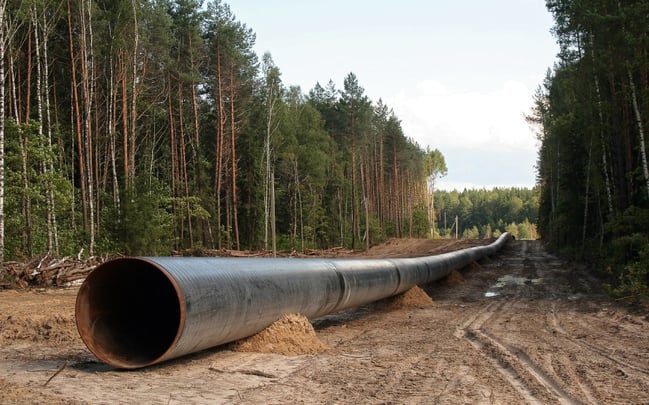
Pipeline construction and maintenance require heavy equipment such as excavators, sidebooms, tracked machinery, pipe-hauling trucks, and concrete delivery vehicles. Without proper ground protection, these loads can:
- Create deep rutting and soil compaction
- Delay work during wet weather
- Increase restoration requirements
- Damage farmland and sensitive terrain
- Limit access to remote work areas
The right matting system creates a stable travel surface that supports equipment, protects sensitive terrain, and helps keep projects moving safely and efficiently.
New Pipeline Installation vs. Integrity Digs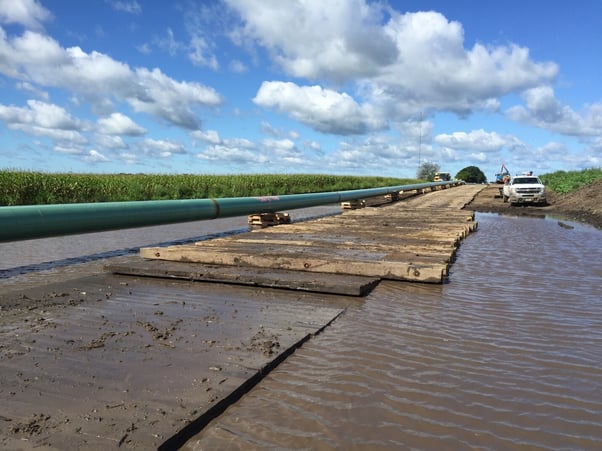
Not all pipeline projects have the same access requirements. The scope, duration, and equipment involved often determine which matting solution offers the best performance and value.
New Pipeline Installation
New pipeline construction projects typically involve long stretches of right-of-way and continuous movement of heavy equipment and materials.
Contractors commonly use:
- Excavators
- Sidebooms
- Tracked equipment
- Pipe-hauling trucks
- Concrete delivery vehicles
- Support and maintenance vehicles
Because of these demanding loads, contractors often use a combination of TerraLam® access mats and traditional timber mats throughout the project.
Along the right-of-way, mats create temporary roads that allow crews to move equipment safely while minimizing ground disturbance. The ability to maintain consistent access is especially important when projects cross agricultural land, wetlands, or remote terrain.
Integrity Digs
Integrity digs are shorter-duration projects performed to inspect, maintain, or repair existing pipeline infrastructure.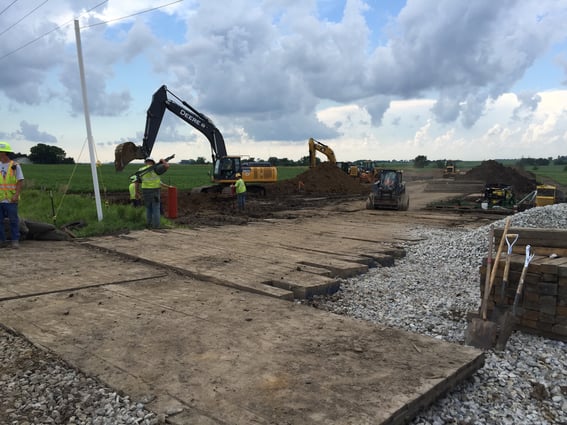
Unlike new construction, integrity digs typically:
- Last less than two weeks
- Require access to a specific location
- Involve a smaller work footprint
- Require fewer equipment movements
These projects are short-term, and contractors often prioritize access solutions that can be mobilized quickly and removed efficiently once work is complete.
TerraLam® CLT mats are frequently used for integrity digs because they provide stable access while covering more ground, helping reduce logistics and transportation requirements.
Choosing Between TerraLam® and Timber Mats
One of the biggest misconceptions in pipeline access is that a single matting solution works for every project. In reality, most contractors use different mat types depending on equipment loads, ground conditions, and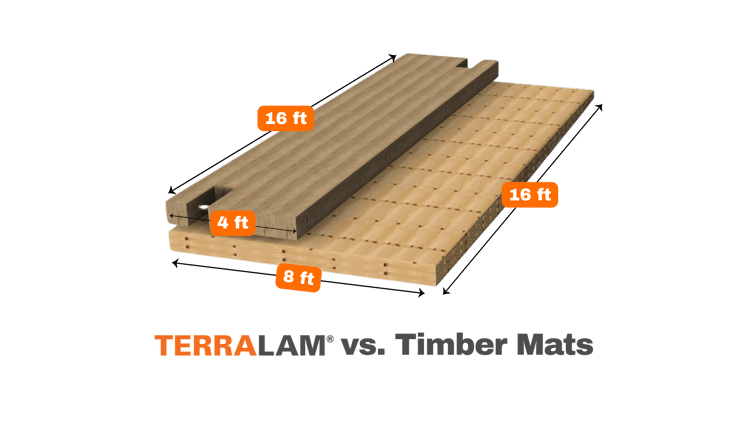 project duration.
TerraLam® Mats
TerraLam® mats are often selected for temporary access roads, staging areas, and integrity digs where transportation efficiency and coverage are important considerations.
Key advantages include:
- Wide 8-foot coverage
- Fewer mats required to cover the same area
- Faster installation and removal
- Reduced transportation costs
- Effective support for pipeline construction activities
One of TerraLam's biggest advantages is its width. TerraLam CLT mats cover more surface area than narrower alternatives, contractors can often achieve the same coverage using fewer mats.
For pipeline projects where freight costs can become a significant expense, reducing the number of mats required can help reduce the number of truckloads needed for transportation, creating both logistical and potential cost-saving benefits.
Timber Mats
Traditional timber mats continue to play an important role on pipeline projects, particularly in extremely challenging ground conditions.
Timber mats are often preferred for:
- Swampy terrain
- Saturated ground conditions
- Wetlands
- Areas requiring maximum flotation
- Applications involving extremely heavy tracked equipment
In severe mud or soft-ground environments, the additional thickness of timber mats can provide the support necessary to keep equipment moving and maintain safe working conditions.
For many projects, the most effective solution is not TerraLam® or timber mats alone, but a combination of both.
Protecting Sensitive Terrain During Pipeline Projects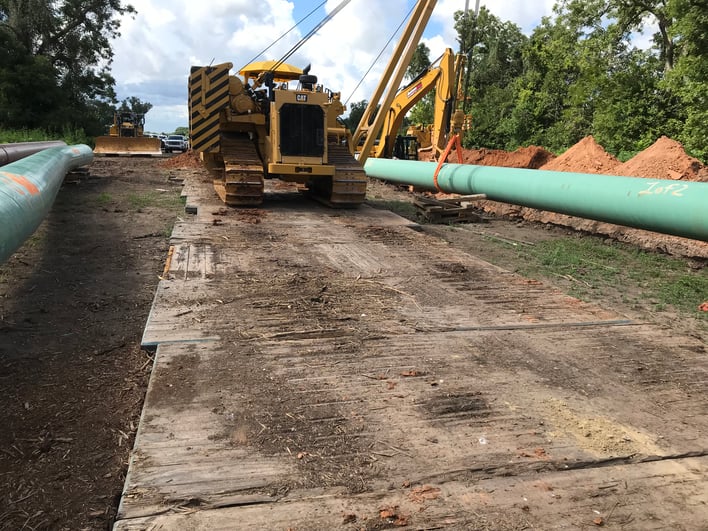
While project efficiency is critical, environmental protection remains a major priority for pipeline contractors and landowners.
Access mats help reduce environmental impacts by:
- Reducing Soil Compaction: Access mats distribute equipment loads across a larger surface area, helping minimize damage to soil structure and agricultural land.
- Limiting Rutting and Ground Disturbance: Creating a stable travel surface helps prevent deep ruts that can increase restoration requirements after construction is complete.
- Improving Access During Wet Conditions: Muddy right-of-ways, seasonal weather, and soft soils can make sites difficult to access. Ground protection mats help crews maintain access without excessive damage to the terrain below.
- Supporting Easier Site Restoration: By reducing ground disturbance during construction and maintenance activities, mats can help simplify restoration efforts once work is complete.
Ready to Find the Right Pipeline Access Solution?
Whether you're planning a new pipeline installation, preparing for an integrity dig, or navigating challenging ground conditions, choosing the right matting solution can improve productivity, simplify logistics, and protect the terrain beneath your project.
Sterling's access experts can help you determine the best combination of TerraLam® CLT Mats and timber mats for your specific application.
Contact our team today to discuss your pipeline access requirements.
Frequently Asked Questions About Temporary Pipeline Roads
What is a pipeline access road?
A pipeline access road is a temporary roadway that allows crews, equipment, and materials to safely reach construction, maintenance, or inspection areas along a pipeline route.
What equipment uses pipeline access roads?
Pipeline access roads commonly support excavators, sidebooms, tracked equipment, dump trucks, pipe-hauling vehicles, cranes, and support vehicles.
When are TerraLam® mats used on pipeline projects?
TerraLam® mats are commonly used for temporary access roads, staging areas, and integrity digs where efficient coverage, mobility, and transportation logistics are important considerations.
When are timber mats used on pipeline projects?
Timber mats are often used in extremely muddy, saturated, or swamp-like conditions where additional thickness and flotation are needed to support heavy equipment.
Can contractors use both TerraLam® and timber mats on the same project?
Yes. Many pipeline projects utilize a combination of TerraLam® and timber mats to address varying ground conditions across the project site.
How do access mats protect the environment?
Access mats help reduce soil compaction, rutting, erosion, and ground disturbance by distributing equipment loads across a larger surface area.
Can access mats help reduce restoration costs?
In many cases, yes. By minimizing damage to soil and vegetation during construction, access mats can help reduce the scope of post-project restoration work.
How does Sterling support pipeline projects?
Sterling provides access solutions for both new pipeline construction and integrity digs, helping contractors improve site access, support heavy equipment, protect sensitive terrain, and maintain project schedules.