
Table of Contents
- What Is the Difference Between TerraLam® and Composite Mats?
- Which Mat Type Handles Heavy Equipment Better?
- Which Mat Is Easier to Transport and Install?
- Which Mat Provides Better Environmental Protection?
- How Do TerraLam® and Composite Mats Perform in Wet Conditions?
- Which Projects Are Best Suited for Each Mat Type?
- TerraLam® vs. Composite Mats Comparison Chart
- Choosing the Right Ground Protection Solution
- Frequently Asked Questions About Access Mats
Selecting the right access mat can significantly impact project costs, installation speed, site protection, and overall productivity. Two of today's most common ground protection solutions are engineered mats like TerraLam® and HDPE composite mats such as MegaDeck® and DuraDeck®.
While both products are designed to improve site access and protect sensitive ground conditions, they serve different purposes. Understanding the strengths of each solution can help contractors, utilities, renewable energy developers, and infrastructure teams choose the right mat for their application.
Understanding the Difference
At first glance, TerraLam® and composite mats share many of the same goals:
- Create temporary access roads
- Protect environmentally sensitive areas
- Reduce rutting and soil disturbance
- Improve jobsite safety and mobility
The difference lies in how each product is engineered and where it performs best.
TerraLam® is an engineered Cross Laminated Timber (CLT) access mat manufactured from sustainable Southern Pine. It combines the strength traditionally associated with heavy timber mats with a significantly lighter, more consistent engineered design.
Composite mats, such as MegaDeck® and DuraDeck®, are manufactured from high-density polyethylene (HDPE). These mats are designed to provide lightweight, reusable ground protection that excels in environmentally sensitive areas and lighter-duty access applications.
1. Load Capacity and Ground Pressure
One of the most important considerations when selecting an access mat is the type of equipment that will be operating on it.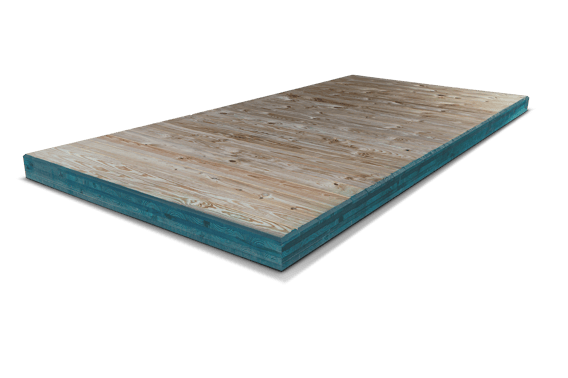
TerraLam® mats are engineered to support demanding infrastructure projects where equipment weights, repeated traffic, and long access roads require a reliable structural platform. The CLT construction distributes loads across the mat surface while maintaining predictable performance from mat to mat.
This makes TerraLam® ideal for:
- Transmission and distribution projects
- Pipeline construction

- Renewable energy development
- Civil infrastructure work
- Heavy construction access roads
Composite mats can also provide excellent ground protection, but their performance depends heavily on the specific product selected.
For example:
- DuraDeck® supports loads up to 200 PSI and is designed primarily for light-duty access.
- MegaDeck® HD+ supports loads up to 600 PSI and is intended for heavier-duty applications.
For projects involving sustained heavy equipment traffic across long distances, TerraLam® often provides a more economical and robust solution.
2. Weight and Ease of Handling
Weight is an advantage often associated with composite mats.
DuraDeck® mats weigh approximately 87 pounds and can often be moved manually by small crews. This allows for rapid deployment in locations where larger material handling equipment is unavailable. For applications requiring greater load-bearing capacity, MegaDeck® HD+ weighs approximately 1,046 pounds while still offering many of the durability and reusability benefits associated with composite matting systems.
Composite mats are frequently selected for:
- Pedestrian walkways
- Event access
- Landscaping projects
- Short-term utility maintenance
- Environmental restoration work
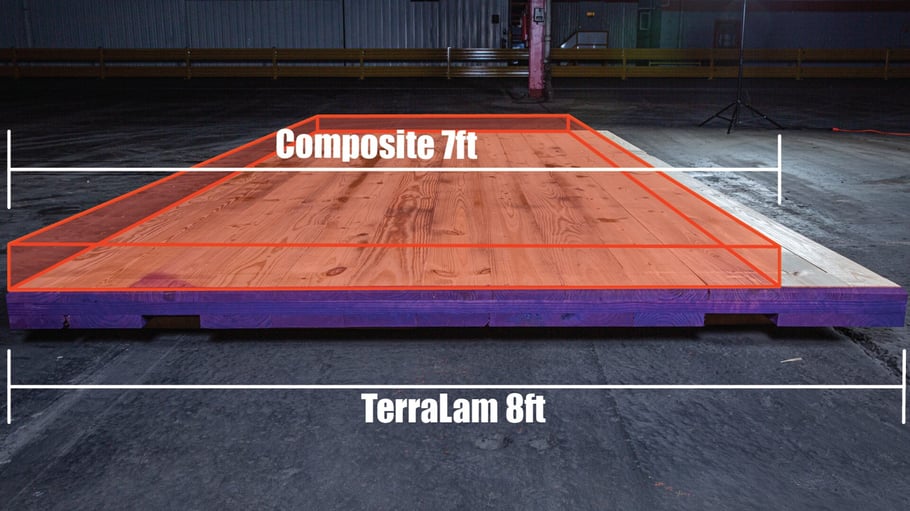
TerraLam® was specifically engineered to bridge the gap between traditional timber mats and composites. Weighing approximately 1,330 pounds, TerraLam® provides substantially greater strength and load distribution than lightweight composite panels while weighing significantly less than many traditional timber mats. This balance of strength and weight helps reduce freight costs and allows crews to transport more access roadway per truckload.
Benefits include:
- More footage delivered per load
- Reduced transportation expense
- Faster deployment
- Improved installation efficiency
3. Environmental Performance
Both solutions offer environmental benefits compared to constructing temporary gravel roads.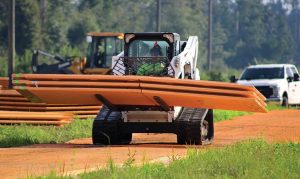
Composite mats are often chosen for environmentally sensitive sites because they:
- Prevent soil mixing and compaction
- Help preserve vegetation
- Leave no residual aggregate behind
- Are 100% recyclable
- Resist rot, moisture, and weather exposure
TerraLam® also delivers strong environmental advantages.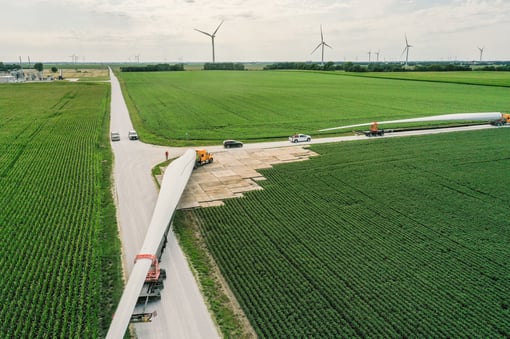
Manufactured from sustainably harvested Southern Pine, TerraLam® utilizes Cross Laminated Timber technology to maximize the value of renewable wood resources. Because the mats are engineered from wood rather than petroleum-based materials, many organizations view them as a sustainable option for long-term site access programs.
Both solutions help reduce ground disturbance compared to traditional access road construction.
4. Durability in Challenging Conditions
Both composite and timber access mats are designed to withstand demanding jobsite conditions, but each offers distinct performance characteristics depending on project requirements.
MegaDeck® HD+ Composite Mats are highly resistant to moisture and environmental exposure. Because HDPE will not rot, splinter, or absorb water, they perform exceptionally well in:
- Wetlands
- Marshes
- Coastal environments
- Areas with frequent freeze-thaw cycles
- Locations requiring frequent cleaning
MegaDeck® HD+ also offers semi-buoyant characteristics that can provide additional support in swampy or saturated conditions.
TerraLam® CLT Mats are engineered and treated to perform in these same challenging environments while delivering exceptional structural capacity. Their cross-laminated timber construction creates a stable working platform capable of supporting continuous heavy equipment traffic and maintaining consistent load distribution throughout the project lifecycle.
When environmental conditions and load demands intersect, factors such as ground conditions, equipment weight, project duration, and access requirements often determine the best solution.
5. Project Scale and Logistics
The size of the project often determines which solution provides the greatest value.
Composite Mats Are Often Best For:
- Short-duration projects
- Small work zones
- Pedestrian access
- Environmental remediation
- Light-duty equipment access
- Utility maintenance work
TerraLam® Is Often Best For:
- Long access roads
- Transmission projects
- Pipeline construction
- Solar and wind developments
- Civil engineering projects
- Heavy construction operations
- Jobs requiring large quantities of matting
For large-scale infrastructure work, TerraLam's combination of engineered strength, lighter weight, and domestic manufacturing can provide significant logistical advantages.
TerraLam® vs. Composite Mats: Quick Comparison
TerraLam®
Best For:
- Heavy equipment access
- Long-term projects
- Utility and transmission corridors
- Pipeline construction
- Renewable energy projects
Advantages:
- Engineered load capacities
- Strong load distribution
- Lower freight costs than traditional timber mats
- Manufactured in the USA
- Sustainable Southern Pine construction
Composite Mats
Best For:
- Light-duty access
- Sensitive environments
- Walkways and work platforms
- Wetlands and marshes
- Short-term projects
Advantages:
- Lightweight handling
- Moisture resistant
- Will not rot or splinter
- Reusable and recyclable
- Minimal ground disturbance
The Bottom Line
The choice between TerraLam® and composite mats isn't about determining which product is better. It's about selecting the right solution for the job.
If your project involves heavy equipment, long access roads, utility corridors, pipeline construction, or renewable energy development, TerraLam® offers an engineered solution that combines the strength of traditional timber mats with improved logistics and installation efficiency.
If your application requires lightweight deployment, environmentally sensitive access, pedestrian pathways, or short-duration work platforms, composite mats like MegaDeck® and DuraDeck® may be the better fit.
At Sterling Site Access, we offer both TerraLam® and composite matting solutions because every project has unique requirements. Our team can help evaluate your ground conditions, equipment loads, and project goals to recommend the best access solution for your site.
Need help choosing the right matting system? Contact Sterling Site Access at (708) 388-2223 to discuss your project requirements and find the best ground protection solution for your next job.
Which Mat Is Right For Your Project?
|
Project Need |
TerraLam® |
Composite Mats |
|
Heavy equipment traffic |
✅ Excellent |
⚠️ Product dependent |
|
Long access roads |
✅ Excellent |
⚠️ Less common |
|
Pipeline construction |
✅ Recommended |
⚠️ Limited applications |
|
Renewable energy projects |
✅ Recommended |
✅ Supplemental applications |
|
Utility transmission work |
✅ Recommended |
✅ Light-duty support areas |
|
Pedestrian access |
⚠️ Can be used |
✅ Ideal |
|
Sensitive environmental areas |
✅ Good |
✅ Excellent |
|
Wetlands and marshes |
✅ Good |
✅ Excellent |
|
Quick deployment by small crews |
⚠️ Equipment required |
✅ Ideal |
|
Long-term durability |
✅ Excellent |
✅ Excellent |
|
Recyclability |
✅ Renewable wood resource |
✅ 100% recyclable HDPE |
FAQs
Are composite mats stronger than TerraLam mats?
Not necessarily. Composite mats excel in lightweight and environmentally sensitive applications, while TerraLam is designed for heavier-duty access roads and infrastructure projects requiring greater load distribution and structural performance.
What is the difference between composite mats and CLT mats?
Composite mats are typically made from HDPE plastic, while TerraLam mats are manufactured from engineered Cross Laminated Timber (CLT). Each offers unique advantages depending on project requirements.
When should I use composite access mats?
Composite mats are best for pedestrian access, light equipment traffic, environmental restoration projects, and areas requiring lightweight deployment.
When should I use TerraLam mats?
TerraLam mats are ideal for transmission, pipeline, renewable energy, civil infrastructure, and heavy construction applications where strength, efficiency, and long access routes are required.
Are TerraLam mats environmentally friendly?
Yes. TerraLam mats are manufactured from sustainably sourced Southern Pine and help reduce ground disturbance compared to traditional temporary road construction methods.