
Table of Contents
- What Is the Difference Between TerraLam® and Traditional Timber Mats?
- Why Does TerraLam® Offer More Consistent Performance?
- How Can TerraLam® Reduce Transportation Costs?
- Why Is TerraLam® Faster to Install and Remove?
- What Makes TerraLam® an Engineered Alternative to Timber Mats?
- How Does TerraLam® Improve Material Handling Efficiency?
- Is TerraLam® More Scalable for Large Infrastructure Projects?
- What Are the Sustainability Advantages of TerraLam®?
- When Are Traditional Timber Mats Still the Right Choice?
- TerraLam® vs. Traditional Timber Mats Comparison Chart
- Which Access Mat Is Right for Your Project?
For decades, traditional hardwood timber mats have been the industry standard for temporary access roads, work platforms, and ground protection. Known for their durability and ability to support heavy loads, timber mats remain a trusted solution for many construction, utility, pipeline, and energy projects.
However, as project schedules tighten and transportation costs rise, contractors are looking for ways to improve efficiency without sacrificing performance. That's where TerraLam® CLT access mats come in.
Manufactured from sustainable Southern Pine using Cross Laminated Timber (CLT) technology, TerraLam® was engineered to provide many of the benefits of traditional timber mats while reducing the weight, variability, and logistical challenges often associated with hardwood matting.
So how do the two compare?
What Is the Difference Between TerraLam® and Traditional Timber Mats?
Traditional timber mats are typically constructed from dense hardwood species such as oak, hickory, and maple. Their weight and durability make them well suited for demanding applications including heavy lifting operations, deep drilling projects, and jobsites with standing water.
TerraLam® takes a different approach.
Rather than relying on the natural characteristics of individual hardwood timbers, TerraLam® utilizes Cross Laminated Timber (CLT) technology to create an engineered access mat with predictable performance and repeatable quality. The result is a mat that combines strength and durability with reduced weight and improved handling efficiency.
1. Engineered Consistency vs. Natural Variability
One of the biggest differences between TerraLam® and traditional timber mats is consistency.
Hardwood timber mats are built from natural lumber and assembled using metal rods, bolts, or fasteners to secure various individual timbers together. While manufacturers carefully select and grade materials, every board can possess different strength characteristics, moisture content, and grain patterns.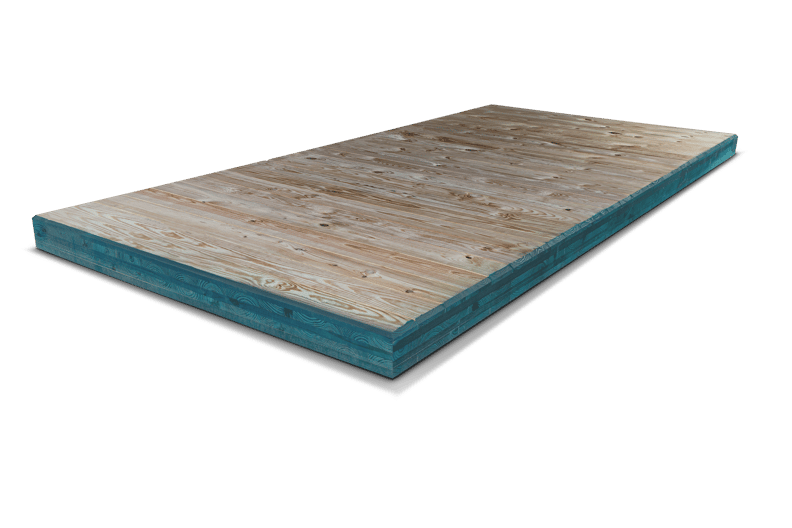
TerraLam®, by contrast, is manufactured using an engineered cross-laminated timber process that creates a repeatable product with known performance characteristics. Because the mat is engineered as an integrated structure rather than a collection of individual timbers held together with metal hardware, it delivers greater uniformity from mat to mat.
This provides:
- Consistent quality from mat to mat
- Predictable load performance
- Improved reliability across large projects
- Greater confidence during project planning
- No metal pieces left behind in the field
For project owners and contractors, consistency often translates into fewer surprises in the field.
2. Lower Transportation Costs
Transportation is one of the largest expenses associated with any matting program.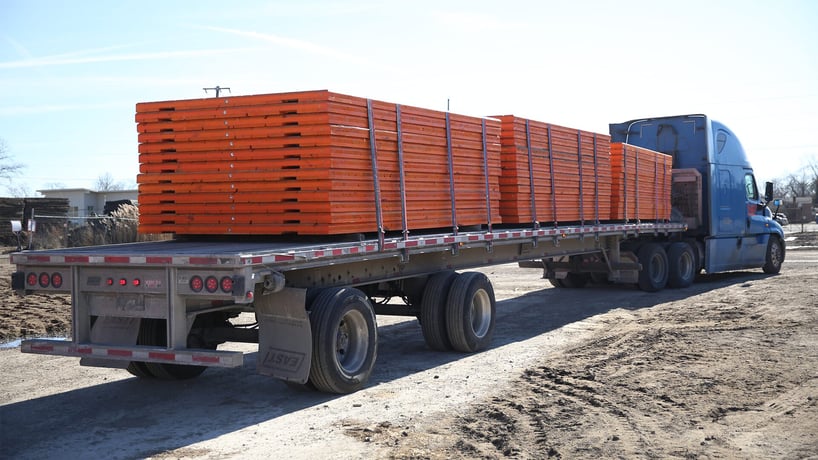
Traditional hardwood mats are extremely durable, but that durability comes with significant weight. Fewer mats can typically be loaded onto each truck, resulting in more shipments and higher
freight costs.
TerraLam® was designed to deliver strength while reducing overall weight.
Benefits include:
- More lineal footage per truckload
- Reduced freight expenses
- Fewer truck movements
- Faster material delivery
For projects spanning miles of right-of-way, these savings can become substantial.
3. Faster Installation and Removal
Every material move impacts project productivity.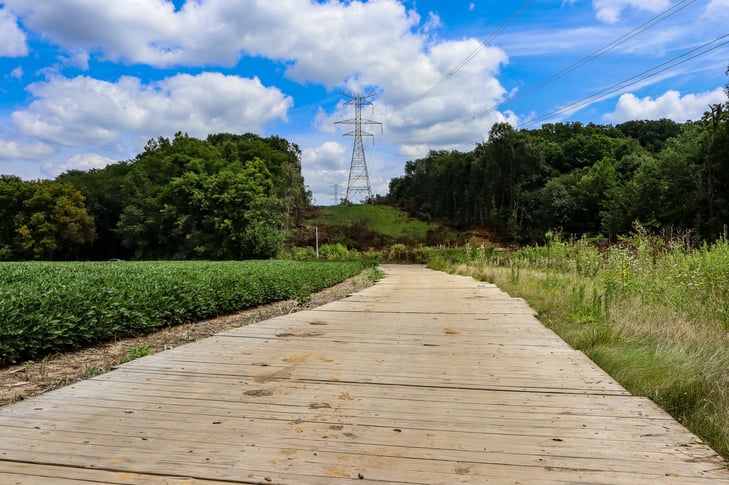
Because TerraLam® weighs less than traditional hardwood timber mats, crews can often move, stage, and install more footage with fewer equipment cycles.
This helps:
- Reduce unloading time
- Increase installation speed
- Improve project efficiency
- Accelerate site restoration
On fast-paced utility, transmission, and pipeline projects, time savings can quickly add up.
4. Known Load Capacities
Many contractors assume heavier automatically means stronger.
In reality, engineered strength and predictable performance are often more important than raw weight.
TerraLam® mats are manufactured to precise specifications with known load capacities, providing a reliable foundation for project planning and execution.
Advantages include:
- Predictable performance
- Consistent load distribution
- Reduced variability
- Repeatable results across every mat
Contractors can make decisions with greater confidence when they understand exactly how their access platform is designed to perform.
5. More Efficient Material Handling
Material handling costs are often overlooked when evaluating access mat solutions.
With traditional timber mats, crews may spend significant time loading, unloading, staging, and repositioning heavy materials.
TerraLam's lighter engineered construction helps crews:
- Move more mats per equipment cycle
- Reduce equipment utilization
- Minimize fuel consumption
- Improve overall productivity
The result is a more efficient operation from delivery through removal.
6. Scalable Production and Availability
Project schedules depend on product availability.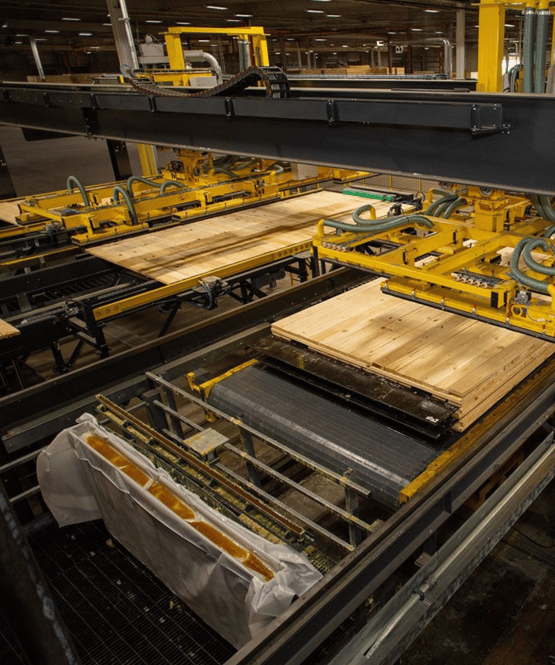
Traditional timber mat production can be influenced by hardwood supply, labor availability, and manufacturing capacity.
TerraLam® is manufactured in automated facilities in the United States using sustainably harvested Southern Pine. High-volume production capabilities help ensure consistent supply for projects ranging from local utility upgrades to large-scale infrastructure developments.
For contractors facing aggressive schedules, reliable availability can be just as valuable as performance.
7. Sustainability Advantages
Environmental stewardship is becoming increasingly important across the construction and energy industries.
Traditional timber mats are typically manufactured from dense hardwood species that can require up to 80 years to reach maturity. TerraLam® mats, by contrast, are manufactured using Southern Yellow Pine, a renewable resource that reaches harvest maturity in approximately 20 to 35 years.
This faster regrowth cycle means forests can be replenished significantly more quickly, supporting up to 300% less deforestation impact when compared to traditional hardwood mat production.
Combined with advanced CLT manufacturing technology that maximizes fiber utilization and material efficiency, TerraLam offers a more sustainable approach to temporary access solutions.
Additional sustainability benefits include:
- Sustainably sourced lumber
- American manufacturing
- Renewable raw materials
- Reduced transportation-related emissions due to lighter weight
For organizations focused on ESG objectives, carbon reduction efforts, or responsible resource management, TerraLam provides a practical way to align project performance with environmental goals.
When Timber Mats Still Make Sense
While TerraLam® offers significant advantages, traditional hardwood timber mats continue to play an important role across the industry.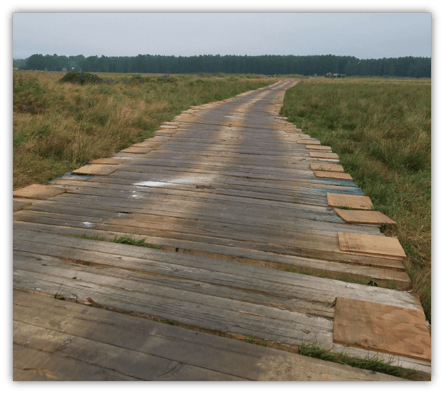
Timber mats are often an excellent choice for:
- Heavy crane operations
- Extremely high concentrated loads
- Deep standing water applications
- Specialized drilling operations
- Projects requiring very thick hardwood platforms
The best solution depends on the specific requirements of the project, equipment, and site conditions.
TerraLam® vs. Traditional Timber Mats Quick Comparison
|
Consideration |
TerraLam® CLT Mats |
Traditional Timber Mats |
|
Engineered consistency |
✅ Excellent |
⚠️ Natural material variability |
|
Weight efficiency |
✅ Lighter |
❌ Heavier |
|
Transportation costs |
✅ Lower |
❌ Higher |
|
Installation speed |
✅ Faster |
⚠️ Slower handling |
|
Known load capacities |
✅ Engineered specifications |
⚠️ Varies by timber composition |
|
Material handling efficiency |
✅ Excellent |
⚠️ More equipment required |
|
Sustainability |
✅ Renewable Southern Pine |
⚠️ Dense hardwood species |
|
Heavy crane support |
⚠️ Application dependent |
✅ Excellent |
|
Deep standing water |
⚠️ Application dependent |
✅ Excellent |
The Bottom Line
Traditional timber mats have earned their reputation through decades of dependable service in some of the industry's most demanding environments. However, today's projects require more than strength alone.
TerraLam® delivers a modern, engineered alternative that combines reliable performance with lower transportation costs, faster installation, improved consistency, and scalable manufacturing.
For transmission, utility, renewable energy, pipeline, and civil infrastructure projects, TerraLam® often provides a smarter and more efficient approach to temporary site access.
Looking for the right matting solution for your next project? Contact Sterling Site Access at (708) 388-2223 to discuss your project requirements and determine whether TerraLam® or traditional timber mats are the best fit for your application.
FAQs
Are TerraLam® mats stronger than timber mats?
Not necessarily. Traditional timber mats may be better suited for certain heavy crane and deep-water applications. TerraLam® is designed to provide engineered, predictable performance while reducing weight and improving logistics.
What is the difference between TerraLam® and timber mats?
TerraLam® is an engineered Cross Laminated Timber (CLT) mat manufactured from Southern Pine, while traditional timber mats are built from large hardwood timbers such as oak, hickory, and maple.
When should I use TerraLam® instead of timber mats?
TerraLam® is often preferred for utility, transmission, pipeline, renewable energy, and civil infrastructure projects where transportation efficiency, installation speed, and predictable performance are priorities.
Are timber mats still used today?
Yes. Timber mats remain a common solution for heavy lifting operations, drilling activities, crane work, and projects involving deep standing water.
Why are contractors switching from timber mats to TerraLam®?
Many contractors are making the switch because TerraLam® offers lower freight costs, easier handling, faster installation, engineered consistency, and reliable product availability.