
Renewable Energy Growth Shouldn't Come at the Expense of Farmland
The rapid expansion of wind and solar energy is transforming America's energy landscape. As developers work to meet growing demand for clean energy, many new projects are being built on or near agricultural land. While renewable energy development provides significant economic and environmental benefits, construction activities can create challenges for farmers, landowners, and project teams alike.
From soil compaction and crop damage to difficult site access and environmental concerns, renewable energy construction requires careful planning to protect valuable farmland. The key is balancing renewable energy development with responsible land stewardship.
At Sterling, we help developers, contractors, and landowners create safe, efficient access solutions that minimize disruption while keeping projects on schedule.
The Challenge of Building Renewable Energy Projects on Agricultural Land
Many wind farms and solar installations are located in rural areas where large parcels of land and favorable site conditions make development possible. However, these locations often present unique challenges.
Tough Terrain and Remote Access
Wind turbines and solar arrays are frequently constructed far from paved roads, requiring crews and equipment to navigate uneven fields, soft soils, wetlands, and seasonal weather conditions. Rain, snow, and freeze-thaw cycles can quickly turn farmland into difficult terrain that slows construction and increases project costs.
Without proper access planning, equipment can become stuck, work can be delayed, and the surrounding land can experience unnecessary disturbance.
Heavy Equipment and Soil Compaction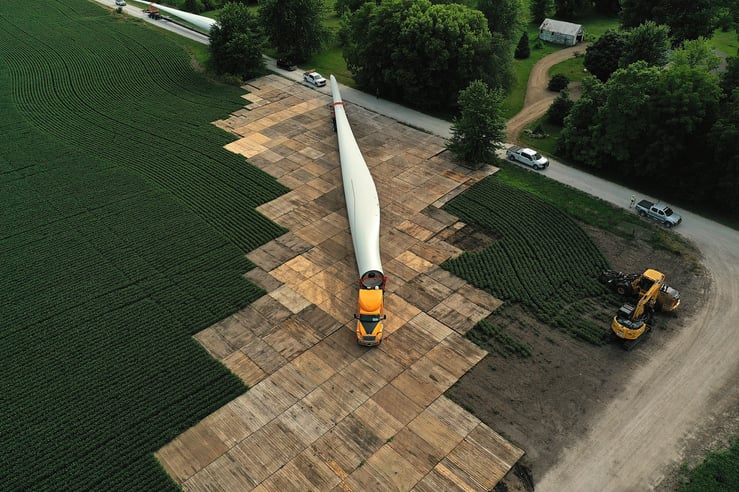
Renewable energy projects require the movement of extremely heavy equipment, including cranes, transport vehicles, concrete trucks, and installation machinery.
The weight of this equipment can compact soil, reducing pore space and limiting water infiltration. Compacted soil can negatively impact crop production for years if not properly managed. In agricultural settings, protecting soil health is just as important as completing construction efficiently.
Environmental Stewardship Matters
Today's renewable energy developers face increasing pressure to minimize environmental impacts throughout the construction process. Protecting natural habitats, preserving drainage patterns, and reducing unnecessary land disturbance are critical considerations for every project.
Carefully planned access routes can help reduce the footprint of construction activities while avoiding sensitive environmental areas and protecting local ecosystems.
Reducing Farmland Impact with Temporary Access Solutions
One of the most effective ways to minimize agricultural disruption is through the use of temporary access matting systems.
Sterling's TerraLam® mats create stable work surfaces that distribute equipment weight over a larger area, helping reduce soil compaction and ground disturbance. These mats provide dependable access across soft, muddy, frozen, or uneven terrain while supporting the heavy loads associated with renewable energy construction.
By creating temporary roadways and work platforms, TerraLam mats help: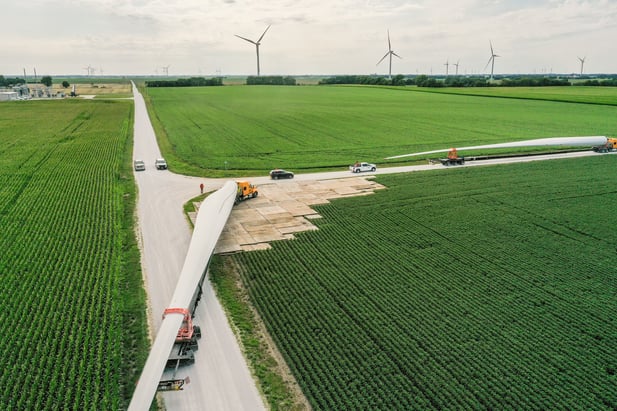
- Reduce damage to productive farmland
- Minimize soil compaction caused by heavy equipment
- Protect crops and root systems when possible
- Maintain project schedules despite changing weather conditions
- Reduce post-construction restoration requirements
- Improve safety for workers and equipment
Smarter Access Planning Reduces Restoration Costs
Protecting farmland starts long before construction begins.
Sterling works closely with project teams to identify the most efficient access routes based on terrain, environmental considerations, and agricultural impacts. By strategically planning equipment movement and staging areas, developers can reduce the amount of land affected during construction.
A thoughtful access strategy can significantly lower restoration costs after project completion while helping maintain positive relationships with landowners and farming communities.
 Supporting Sustainable Energy Through Responsible Construction
Renewable energy development and agricultural preservation do not have to compete. With the right planning, access solutions, and site management practices, developers can successfully build wind and solar projects while minimizing impacts on productive farmland.
As renewable energy projects reach increasingly remote and challenging locations, access becomes one of the most important factors influencing both project success and environmental stewardship.
Sterling helps renewable energy developers overcome rugged terrain, protect sensitive landscapes, and safeguard agricultural land through proven access solutions designed for the unique demands of wind and solar construction.
Partner with Sterling for Renewable Energy Site Access
Whether your project involves wind turbines across working farmland or solar installations in remote locations, Sterling provides the expertise and TerraLam® mat solutions needed to create safe, reliable access while protecting the land beneath it.
Contact Sterling today to learn how our temporary access solutions can help keep your renewable energy project moving while preserving valuable agricultural resources for future generations.