
When disaster strikes, the race to recovery begins immediately.
Whether responding to a hurricane, tornado, flood, or other severe weather event, recovery teams face one critical challenge before any rebuilding can begin: access. Damaged roads, washed-out crossings, unstable ground conditions, and limited infrastructure can prevent emergency personnel, equipment, and supplies from reaching the areas that need them most.
As severe weather events become more frequent and more destructive, the ability to quickly establish temporary infrastructure is essential to successful disaster recovery efforts. Sterling Site Access Solutions helps disaster recovery companies overcome these obstacles with rapid deployment access products that create safe, reliable pathways, work areas, and shelter foundations in even the most challenging conditions.
The Importance of Immediate Site Access
Disaster recovery projects often begin in environments where existing infrastructure has been compromised or completely destroyed. First responders, utility restoration crews, contractors, and support organizations must be able to safely access affected areas to assess damage, restore services, and provide relief to impacted communities.
Without reliable access, recovery efforts can be delayed, increasing costs and extending downtime for residents and businesses.
Rapid deployment access solutions help bridge the gap between disaster response and long-term reconstruction by creating temporary infrastructure that allows critical operations to continue without waiting for permanent repairs.
Temporary Roads: Creating Access Where It's Needed Most
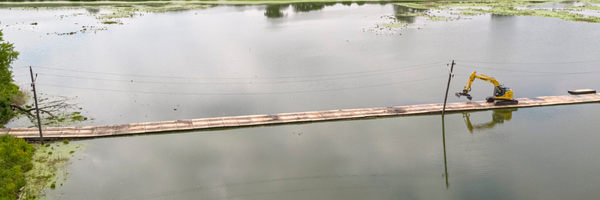
Roadways are often among the first pieces of infrastructure impacted by severe weather. Flooding, heavy rainfall, debris, and unstable ground conditions can make traditional routes impassable for emergency vehicles and heavy equipment.
TerraLam® mats provide an effective solution for creating temporary roads that support emergency response and recovery operations. Lightweight yet extremely durable, these access mats can be quickly deployed to establish routes for freight trucks, utility vehicles, cranes, and other essential equipment.
Benefits of Temporary Road Systems
- Rapid deployment in emergency situations
- Reliable access across soft or unstable terrain
- Reduced ground disturbance and environmental impact
- Support for a wide range of vehicle weights and load requirements
- Flexible configurations to accommodate site-specific conditions
By establishing temporary roads, disaster recovery teams can move personnel, equipment, and supplies efficiently while minimizing disruptions and delays.
Temporary Bridges: Restoring Critical Connections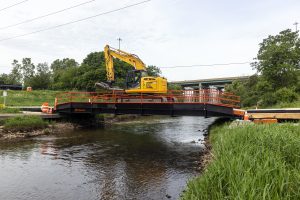
When bridges or crossings become damaged during a disaster, entire recovery operations can come to a standstill. Access to neighborhoods, utility corridors, and work sites may be severely restricted, preventing crews from reaching affected areas.
TerraCross® temporary bridges provide a fast, practical alternative to lengthy bridge reconstruction projects.
Designed for rapid deployment, TerraCross bridges can span distances up to 50 feet and support loads of up to 100 tons. These systems allow recovery organizations to restore access quickly, helping keep projects moving forward and ensuring supplies and equipment can reach their destination.
Advantages of Temporary Bridge Solutions
- Fast installation with minimal site preparation
- Support for heavy equipment and freight vehicles
- Spans up to 50 feet
- Load capacities up to 100 tons
- Portable designs with select models delivered by a single truck
By restoring critical transportation links, temporary bridges help recovery teams avoid costly delays and maintain momentum during the rebuilding process.
Staging Areas: Building a Stable Base of Operations
Effective disaster recovery requires more than access r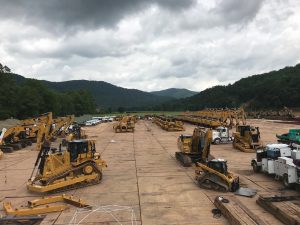 outes. Teams also need safe, organized spaces to store materials, coordinate logistics, and position equipment.
In many affected areas, existing infrastructure may not be available to support staging operations. Establishing a stable platform is essential for maintaining efficiency and safety.
TerraLam mats provide a durable foundation that can be rapidly deployed to create temporary staging areas for equipment, supplies, and personnel.
Common applications include:
- Equipment laydown yards
- Material storage areas
- Utility restoration staging locations
- Emergency operations centers
- Logistics and distribution hubs
With a stable and reliable working surface, crews can safely access and move equipment while maintaining organized operations throughout the recovery effort.
Shelter Foundations: Supporting Temporary Housing and Relief Efforts
When existing buildings are damaged or unavailable, temporary shelters are often needed to house displaced residents, emergency responders, and recovery personnel.
However, a shelter is only as effective as the ground beneath it.
TerraLam mats provide a strong, dependable foundation for temporary tenting systems and relief structures. Unlike plywood or lightweight plastic matting, TerraLam mats offer a more durable platform that resists shifting, bending, and uneven ground conditions.
Benefits of TerraLam Shelter Foundations 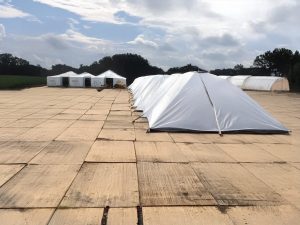
- Creates a stable base for temporary shelters and relief structures
- Allows equipment and temporary structures to be securely fastened
- Provides a durable surface for walking and daily operations
- Reduces movement caused by soft or uneven ground
- Supports rapid deployment in remote and heavily impacted locations
- Helps improve safety and comfort for shelter occupants
By creating reliable shelter foundations, disaster response organizations can establish functional temporary housing quickly and confidently, helping communities begin the recovery process sooner.
Supporting Recovery When Every Minute Counts
In disaster recovery, speed and accessibility can make all the difference. Temporary roads, bridges, staging areas, and shelter foundations provide the infrastructure necessary to overcome damaged conditions and keep recovery efforts moving forward.
Sterling Site Access Solutions supports disaster recovery contractors, utility providers, emergency response organizations, and government agencies with access solutions designed for rapid deployment and dependable performance.
When communities are working to recover from devastating events, getting people, equipment, and resources safely to the site is often the first step toward rebuilding.
Partner with Sterling Site Access Solutions
From temporary roads and bridges to staging areas and shelter foundations, Sterling Site Access Solutions provides the products needed to restore access and support recovery operations when permanent infrastructure has been compromised.
Contact our team today to learn how our rapid deployment access solutions can help support your next disaster recovery project and keep your recovery efforts moving forward.