
When project teams evaluate site access solutions, the conversation often begins and ends with pricing.
What is the daily rental rate?
What's the cost per linear foot?
How can we reduce upfront spending?
While these questions are important, they often miss a much larger opportunity. The lowest-cost access solution is not always the solution that delivers the lowest total project cost.
As transmission owners, EPC firms, and contractors face increasing pressure from labor shortages, supply chain disruptions, environmental requirements, and aggressive schedules, value engineering has become more important than ever. The organizations achieving the best project outcomes are not simply buying access products, they are optimizing project performance with engineered solutions.
The difference lies in understanding the true cost of access.
What Value Engineering Really Means
Value engineering is often misunderstood as a cost-cutting exercise. In reality, effective value engineering focuses on maximizing project value while maintaining performance, safety, reliability, and compliance.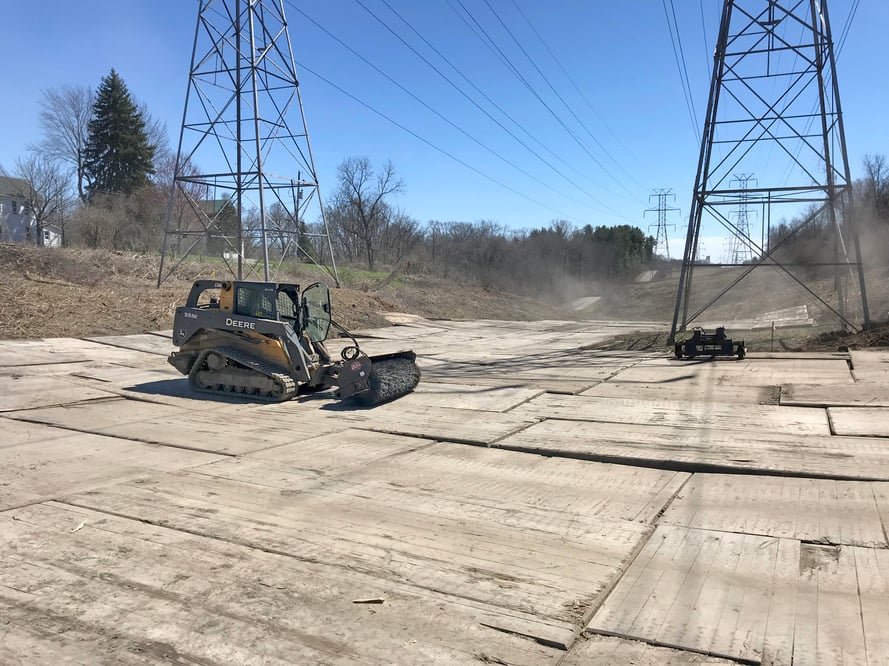
In site access planning, that means evaluating solutions based on their impact on the entire project, not just their initial price.
Factors such as installation labor, transportation requirements, freight costs, equipment utilization, permitting complexity, environmental impacts, schedule performance, restoration costs, and long-term durability all influence the true cost of an access solution.
A product with a higher upfront price may ultimately save money if it reduces labor hours, shortens schedules, minimizes environmental impacts, or prevents costly project delays.
The question project teams should be asking is not, "What costs less today?"
The question is, "What delivers the best total project outcome?"
Looking Beyond Initial Material Costs
Material selection provides one of the clearest examples of value engineering in action.
Many project teams compare site access products strictly based on rental rates or purchase prices. However, focusing exclusively on material cost often overlooks the broader factors that drive project economics.
Cross-laminated timber (CLT) mats, like TerraLam, may carry a higher initial cost than some traditional mixed hardwood alternatives. Yet their engineered construction can provide significant advantages across the project lifecycle and reduce overall site access costs.
Certified load ratings provide greater reliability and confidence when supporting heavy equipment. Consistent manufacturing delivers predictable performance and reduces uncertainty in the field. Reduced weight can improve truck utilization and lower freight costs. Faster installation can reduce labor requirements and improve productivity. Longer service life can minimize replacement frequency and lower overall lifecycle costs.
When all these factors are evaluated together, the apparent cost difference at procurement often narrows or disappears entirely.
The most effective project teams assess products based on total cost of ownership rather than initial price alone. TerraLam was designed to lower total project cost while holding on to quality and longevity of mat life.
Innovation as a Value Multiplier
Innovation plays a critical role in value engineering because it often creates efficiencies that traditional cost comparisons fail to capture.
A strong example is Sterling's patent-pending dipping and doweling process developed through the company's Innovation Lab.
The process addresses one of the most common challenges faced by timber mat systems: degradation caused by moisture, heat, microbial activity, and long-term exposure to demanding field conditions.
Through a specialized treatment process, strategically drilled openings allow environmentally responsible preservatives to penetrate deeper into the mat structure before being sealed with hardwood dowels. The result is enhanced protection against deterioration and extended product performance.
For customers, the value extends well beyond the mat itself.
Longer service life means fewer mat replacements during a project's duration. Reduced deterioration lowers the frequency of swap-outs and associated labor costs. Eliminating metal fasteners simplifies end-of-life processing and recycling. Enhanced durability allows engineered timber mats to perform effectively in regions where environmental conditions previously limited their use.
These benefits reduce project disruptions, lower operational costs, and improve long-term returns.
Access Route Optimization Creates Significant Savings
Value engineering is not limited to products. In many cases, the greatest opportunities come from optimizing the overall access strategy.
Project teams frequently evaluate whether temporary roads, matting systems, elevated work platforms, bridge crossings, or hybrid solutions provide the best overall outcome.
The answer depends on factors such as terrain, environmental conditions, schedule requirements, permitting considerations, restoration obligations, and equipment loading needs.
For example, a temporary road may appear less expensive initially but require extensive aggregate, longer installation timelines, significant restoration efforts, and environmental mitigation measures.
An alternative access approach may have a higher upfront cost while dramatically reducing installation labor, environmental impacts, and restoration expenses.
When evaluated across the full project lifecycle, the alternative solution may provide far greater value.
The most successful site access plans are designed around project objectives rather than predetermined construction methods.
Engineering Efficiency into Waterway Crossings
Temporary crossing solutions highlight the importance of value engineering particularly well..jpg?width=900&height=600&name=2020_0605_TerraCross_ComEd_NewLenox_12%20(1).jpg)
Traditional temporary crossings often involve significant excavation, fill material, culverts, restoration activities, and permitting requirements. These activities increase costs while creating potential environmental and schedule risks.
Engineered bridge systems can offer a different approach.
TerraCross® bridges were designed to address many of these challenges. The system combines cross-laminated timber panels with welded steel backbones to create a certified 100-ton bridge solution capable of spanning waterways, drainage features, and underground utilities.
Beyond load capacity, the system provides several operational advantages.
Its lighter weight compared to traditional steel alternatives allows deployment using equipment commonly found on transmission construction projects. Installation can often be completed in less than a day, reducing schedule impacts and labor demands. Modular configurations allow project teams to select the most appropriate size for specific applications. Efficient transportation on only one truck reduces freight requirements and associated costs.
Most importantly, bridge solutions often eliminate many of the environmental and permitting challenges associated with traditional temporary crossings. By spanning sensitive areas rather than filling them, projects can reduce disturbance, simplify compliance, and avoid unnecessary restoration expenses.
And since the project is engineered, you know exactly the load it can carry.
A Real-World Example of Value Engineering
A large residential development project at Pine Meadows Reserve demonstrates how access optimization can create meaningful project value.
The development required heavy construction equipment to move efficiently across waterways throughout a 240-acre site. Traditional access methods would have increased travel distance, required substantial earthwork, and created additional environmental considerations.
Instead, two TerraCross bridges were installed side-by-side to create a temporary two-lane crossing.
The solution reduced travel distance by approximately 80%, improved equipment efficiency, and supported project schedules without requiring lengthy installation activities.
According to Hanover Land Company's Vice President, the bridge system played a significant role in helping the project stay on schedule and within budget.
This is the essence of value engineering: identifying solutions that improve project performance rather than simply reducing upfront costs.
Final Thoughts
The most effective site access solution is rarely determined by rental rates alone.
True value engineering considers the complete project lifecycle, including labor requirements, freight costs, environmental impacts, schedule performance, restoration obligations, durability, safety, and risk management.
When these factors are considered together, project teams often discover that the lowest price option is not the lowest-cost solution.
In today's transmission construction environment, success depends on more than controlling expenses. It requires maximizing value.
Organizations that embrace this mindset can improve project certainty, strengthen stakeholder confidence, reduce total project costs, and create the operational flexibility needed to navigate an increasingly complex construction landscape.
Because in modern infrastructure development, the smartest investment is often the one that delivers the greatest outcome — not simply the lowest price.